
Save Our Swale is proving to local communities that grassroots river monitoring is possible, and a powerful tool to hold polluters to account. By uncovering pollutants that may otherwise go unnoticed, the group is showing what ordinary people can achieve by raising awareness of the declining health of rivers across the UK.
Friends of the Dales visited Richmond to join microbiologist Keith Thomas test the River Swale. We chatted with him about what pollutants are turning up in the water and how we can all help protect our rivers.
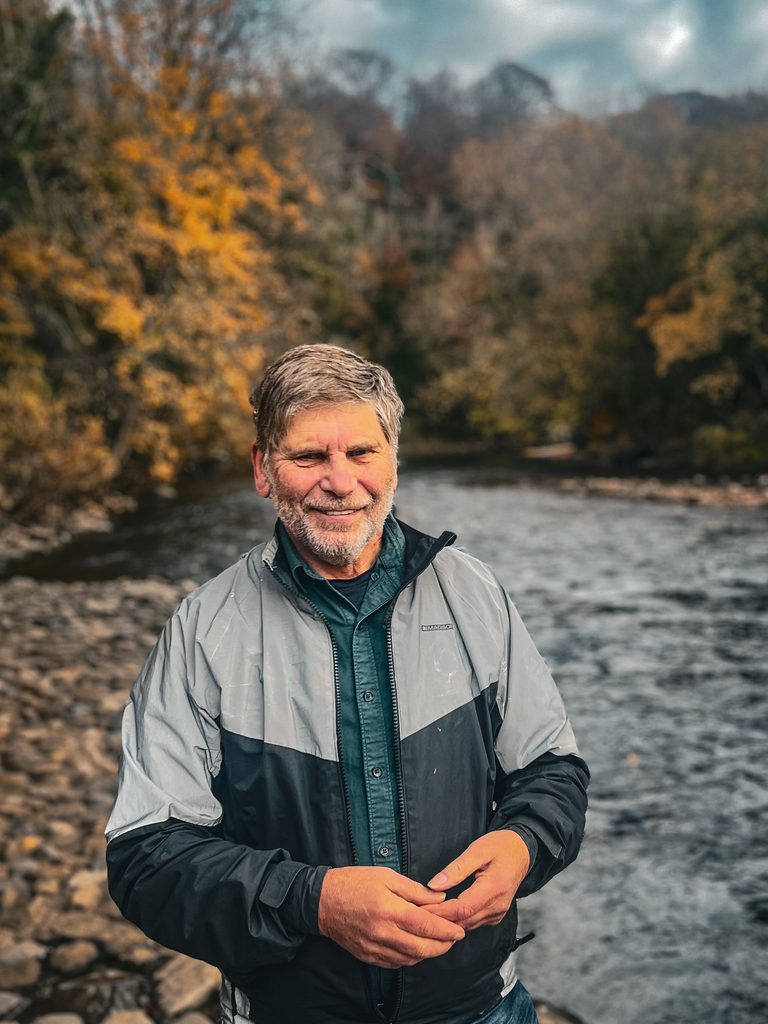
What are we doing here today, Keith?
Keith: We’re looking at the points on the river where there’s an opportunity to judge the quality of the water. So we’re going to sample and check the water quality. We’re keen to also put that into a broader context, such as why people use the river, what the value of the river is, how it’s changing and why.
How did Save Our Swale come about, and what made it work?
Keith: It started mainly because anglers saw water quality vary, along with occasional serious pollution incidents that caused fish to die. We came together, almost incidentally, and said, “What could be done about this more generally?” One of the things that worked well was having a range of people with different skills who were also keen to get involved in looking after the river’s health.
How did you become part of Save Our Swale, and how has your professional background helped?
Keith: I was there when we were talking with the anglers. One of them presented a data sheet with some chemistry on it and said, “What does this mean?” I recognised it from work I’d done as a microbiologist. I was able to interpret the data and understand what it was telling us, such as which readings were a bit high and what to do about it.
I am a microbiologist, particularly a mycologist, working with fungi, but I’ve also worked on projects on water quality. So there’s a bit of chemistry and a bit of microbiology, and it was interesting to be able to say, “Oh, that’s this,” and “That’s a bit high.” A number of people said they’d be interested in getting involved.
It’s been really positive to see how people have come along and developed their skills and knowledge and applied them recreationally in the local community.
What’s the concern with this stretch of River Swale?
Keith: It’s been a concern for a fair while, and we’ve kept an eye on it. When you look at the river running along here, you’ve got the town up the hill, and there are over 9,000 people in it, so there are going to be sewage overflows. They [overflows] come down from all over, although we can’t see the sewage because it’s underground.
We’ve just passed an overflow that runs out into the river. When we’ve tested it, there have been extremely high levels of E. coli and ammonia.
How do you identify suitable sites for testing, and how many points along the river are you testing?
Keith: We’ve got eight regularly designated sites. From high up in the dale. Wainwath is the sampling site at the river source, so from Wainwath through Grinton, Richmond and Brompton upon Swale and other sites intermittently. It covers both an agricultural part of the dale and an urban stretch through Richmond and further down to where the river flows towards York.
We do tests from the overflows themselves, and we know those will be high. But we also test the river’s main flow, including designated bathing spots because that’s where people will encounter the water directly.
We are pleased, however, to see that levels of pollution at the designated bathing water area are generally low and that Yorkshire Water and the Environment Agency are committed to long-term management of the bathing spots and not just responding to incidents.
We also have a team of volunteers who monitor the invertebrates in the river to assess its ecology and to allow correlations with the other measures.
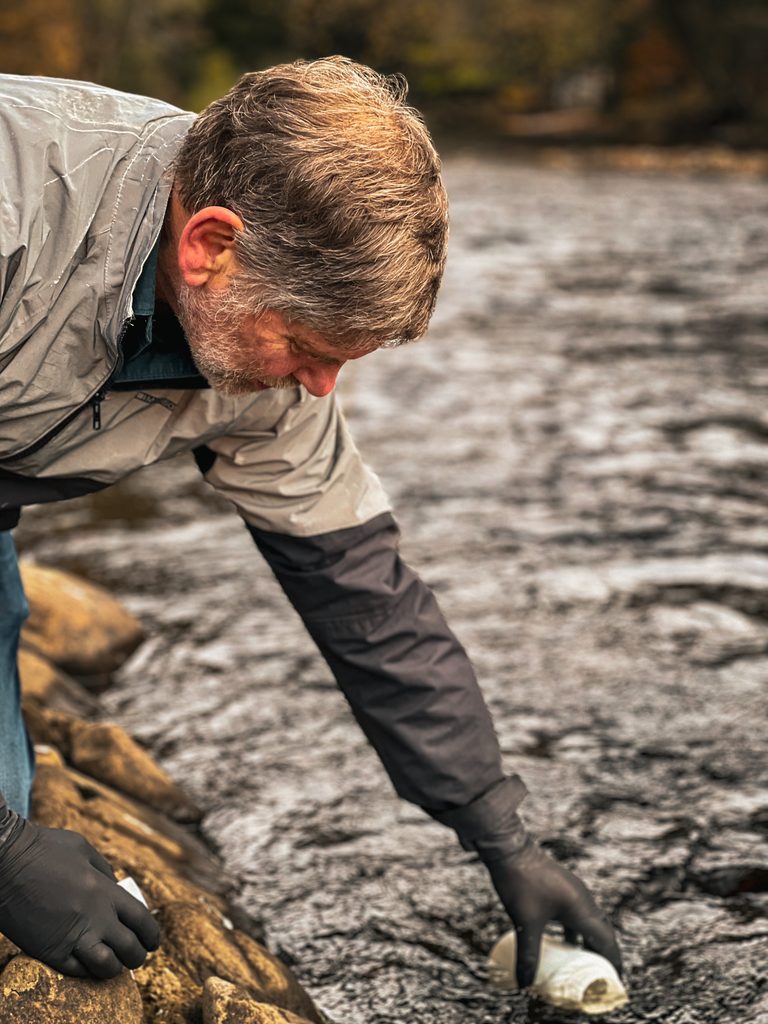
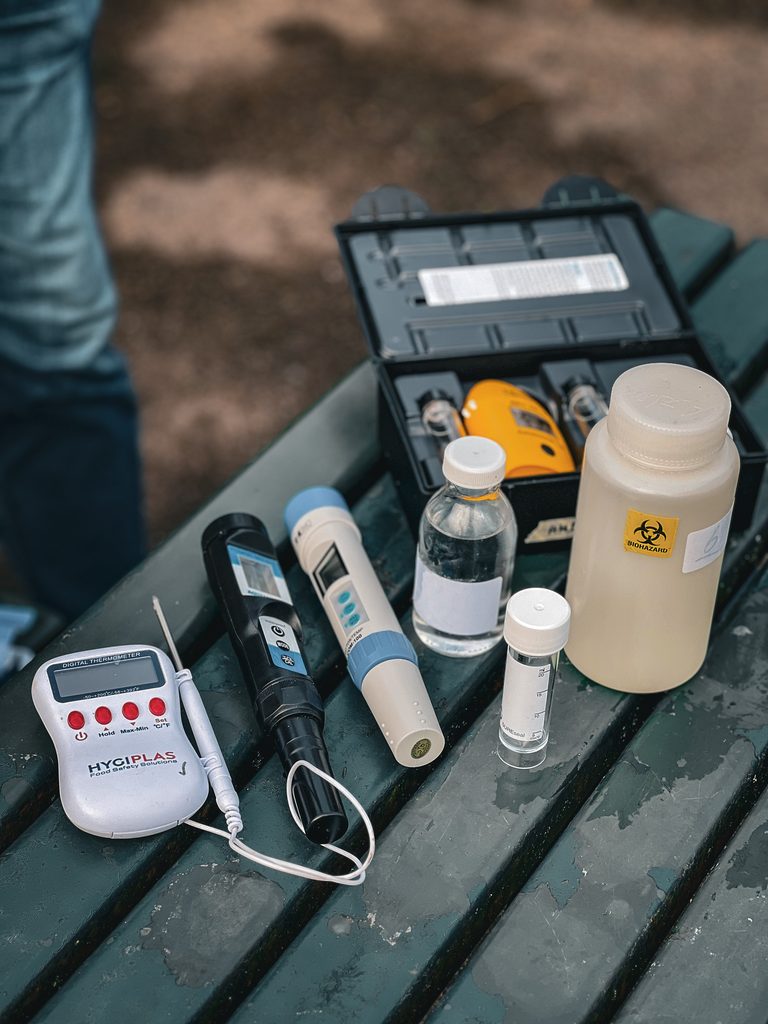
In terms of the kit that you’re using today, what’s the cost of setting up? Did you fund that yourselves, or did you receive a grant or do fundraising?
Keith: Most of the analysis we do is relatively inexpensive. It cost a few hundred pounds to buy most of the kit. We had to fundraise for that. We did things like coffee mornings, events, and talks, and asked for donations.
We were very conscious that we didn’t want to take any grant funding to remain entirely independent. It’s not as detailed as an established laboratory, but it’s close enough to give a reasonably accurate level of data. However, we also send samples out to an independent laboratory and correlate their data with ours. This does incur more costs, which requires extra fundraising, but this measure is essential to ensure that our samples are credible.
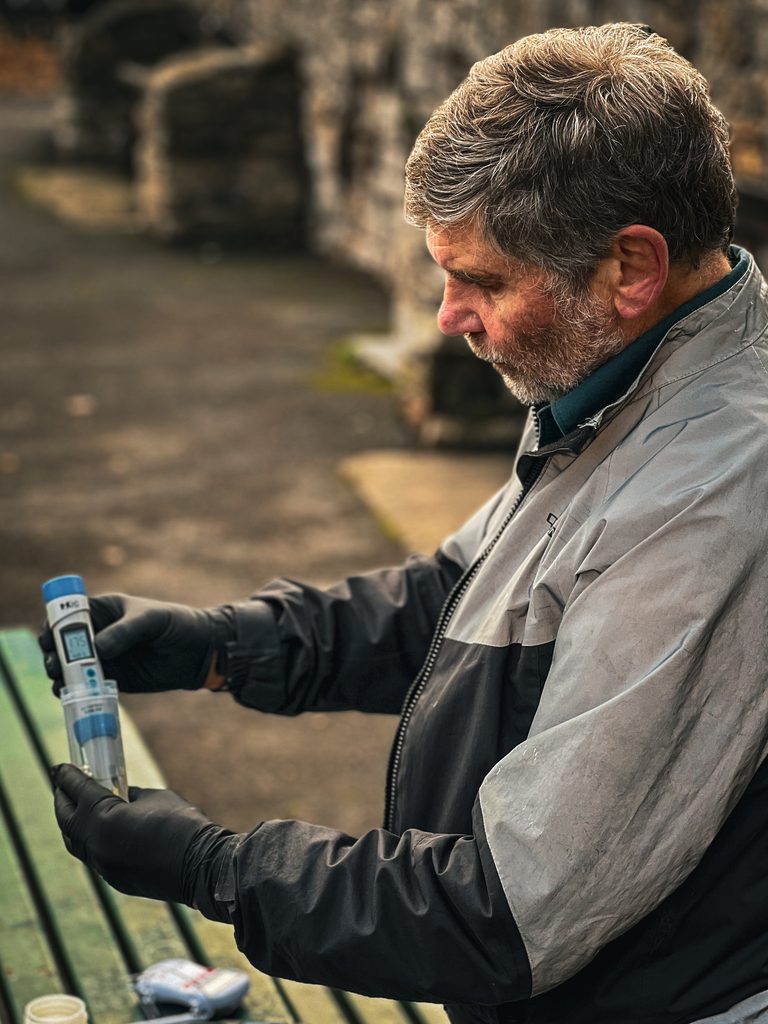
What does the sample we have taken from the river today indicate?
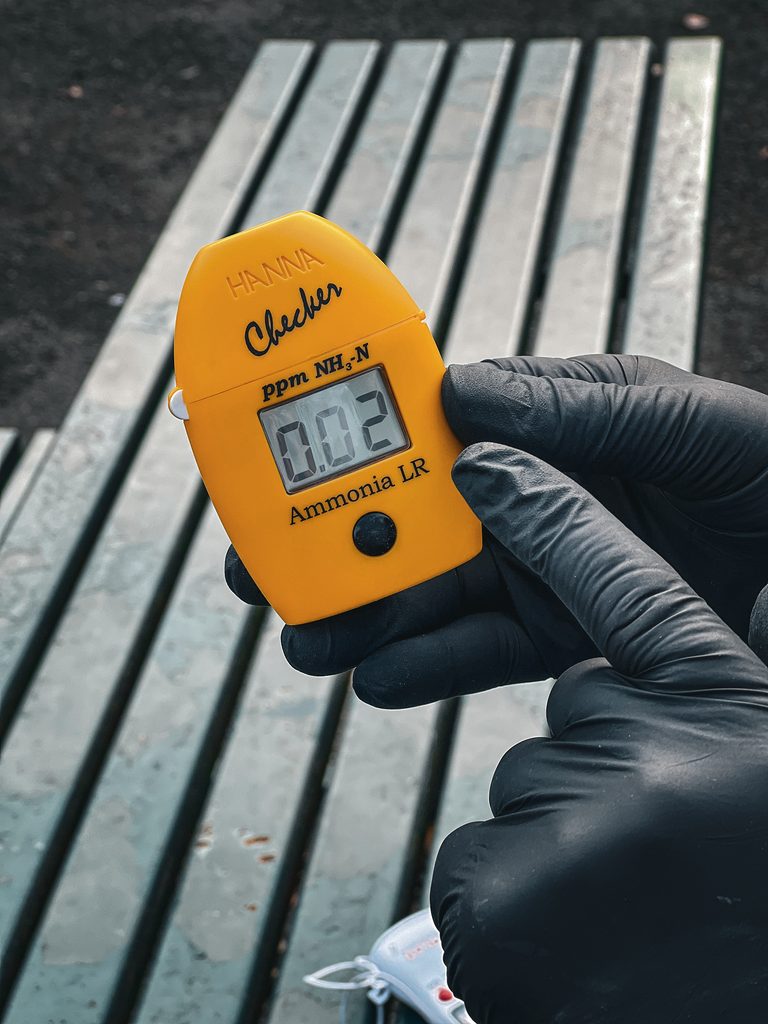
Keith: The sample we took this morning from the main flow is reading 0.02 for ammonia, which is relatively low, but it’s concerning that it is present. Ideally, Ammonia shouldn’t be in the water at all. It most likely came from some release, either sewage overflow or agriculture, through manuring or livestock on the land. We can’t say there’ll ever be none, but we want it as low as possible.
What thresholds are you looking out for, and how do the readings compare between the overflow and the main river? Are you seeing any clear patterns or spikes in those levels?
Keith: High ammonia will probably mean high bacteria and phosphate, although phosphate is slightly separate because it can come from other things too. A reading of 0.02 is not significantly higher than normal. On the sewage overflow itself, it varies between 15 and 20, so that’s concentrated sewage. Here, it’s diluted by the main river flow, though it could still be treated better and reduced. Reviewing the recordings, we can identify patterns. Some things go up in the summer, and some go down, because the river’s fuller and faster and so on.
But there are spikes. I was looking at the E. coli readings on Yorkshire Water’s monitor, and their limit is 2,000, because they don’t seem to measure any higher than that. Three or four times in the last few months it hit that limit!
What could Yorkshire Water do to improve things at the Easby treatment works, and what infrastructure is missing here compared to larger plants?
Keith: We’re particularly concerned that although things are moderately okay in some parts, they’re [Yorkshire Water] only monitoring the area with bathing water status. Just around the corner at Easby, where the Richmond treatment works is, we know there’s a release of treated sewage directly into the river. When we test and monitor it, it still has high levels of ammonia, E. coli and phosphate, which indicates it’s not being fully treated.
They could put these treatments in, so why don’t they?
Keith: They could fully treat it. Other works, usually bigger ones, have a phosphate precipitation system, and a system to kill off E. coli and other microorganisms. They haven’t got that here. They’re running a standard 1960s or ’70s percolating filter system, and it’s obviously still releasing quite high levels. It depends on the population the works serves. The breakpoint is 10,000, and I think Richmond’s population is about 9,570, so it falls just below the threshold. That means there’s no obligation to do it. But we want to say that even if there isn’t an obligation, we’d like the investment, so that we can have a cleaner river further downstream.
If someone wanted to get involved in their local community, how would they go about starting, would you say? What would be the best way to start?
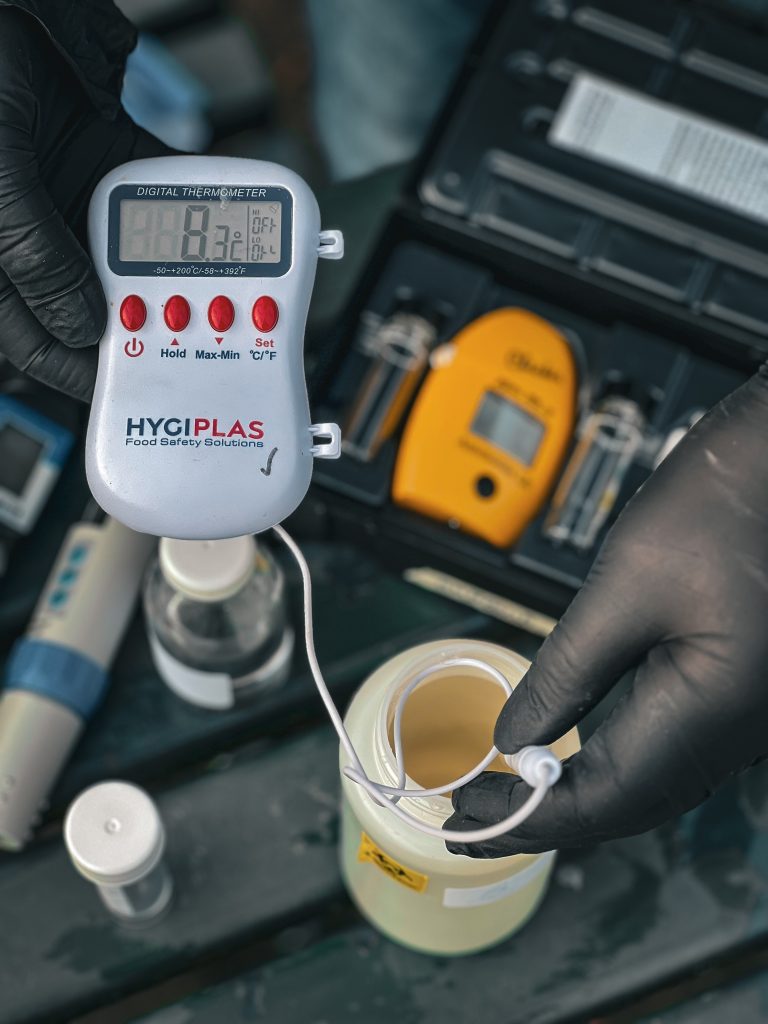
Keith: For the simple analyses, we do ammonia, phosphate, pH, and conductivity. You can get little probes that might be £50 or £70 each, so a few hundred pounds would get you started. There are even cheaper ways; I think the anglers use a slightly cheaper method, like a litmus paper test, which is quick and easy. Starting with those is great.
Save Our Swale can and has advised various other groups, demonstrated the kit, and gone through procedures with them. Once you’ve got a couple of enthusiastic people to take that on, you can get a crowd of people to come along and do the sampling and the work.
It’s not one person working in their cellar all the time; it’s a variety of people. You come together, you do it together, and that builds experience and gives the group momentum.
If someone is inspired to take action, what can they do in their local community?
Keith: Well, there’s a range of things that would be worthwhile. MPs, of course, they’re obligated to respond to their constituents around these types of concerns. We’ve got an MP who voices some support, but the question is whether they’ll vote in an appropriate way when the issues arrive in Parliament. So it needs to be more targeted, for example, when it comes up in a speech or a motion.
Local councillors, because they act for people at a local level. They need to know your concerns about the river and your safety, particularly if there’s an incident of some sort, because they can pass that on to the council. The council might then be able to look at it from a planning perspective or, if an incident has happened, a health and safety angle.
Then there are the campaign groups. If there’s none locally, either look for another one to help, or help set one up. There are also groups like Surfers Against Sewage and Sewage Campaign Network. Similarly, Action for Quality Aquatic Environments who are based at the University of York, coordinate extensive monitoring of pollutants in collaboration with local community science groups. These organisations can give you context and advice. Angling associations also do similar work.
It’s worth keeping up with the national organisations. There’s quite a variety of groups around the country, and they can organise good publicity. People must be given good facts and not scaremongering ones.
What gives you hope that you can turn the tide on the health of the River Swale and the rivers in the Yorkshire Dales?
Keith: You get hope from working together with other people, rather than worrying all on your own. There are lots of people that are concerned, willing to help and contribute. Locally, the council seems positive about helping and is concerned about this sort of thing.
But nationally, the management of the water industry is something that needs to be pushed, and hopefully it will be. It’s going to take a while; you can’t solve it overnight, but we need accountability from water companies and clear timescales, investment and management. The more that people can get involved and raise their concerns, the bigger difference we can make.
What’s next for Save our Swale?
Keith: There are bigger concerns, and one that I personally find particularly relevant is this. We’re finding bacteria in the river. To be honest, there’s always bacteria. E. coli is there all the time. The real issue is the harmful, pathogenic strains, like pathogenic E. coli and other disease-causing bacteria. Even worse, there are antibiotic-resistant bacteria. So our next step is really to start monitoring for those.
Are you part of a group making a difference for nature and sustainability in your community? Friends of the Dales is always on the lookout for stories of local action across the Dales. Get in touch and let us know what you’re working on by emailing me at cailum.peers-earley@friendsofthedales.co.uk